Submerged natural landmark · Destinations
Guaira Falls: The Lost Waterfalls Beneath Itaipu
Guaira Falls disappeared beneath the Itaipu reservoir in 1982. Understand Sete Quedas history and distinguish it from today’s Iguaçu Falls visits.
Start here
Your questions, answered
Can you visit Guaira Falls today?
You cannot visit the former waterfalls as a functioning waterfall attraction. They were inundated when the Itaipu reservoir formed in 1982.
Are Guaira Falls the same as Iguaçu Falls?
No. Guaíra Falls, also called Sete Quedas, were on the Paraná River. Iguaçu Falls is a separate waterfall destination associated with the Iguaçu River.
Understand what happened to Guaíra Falls
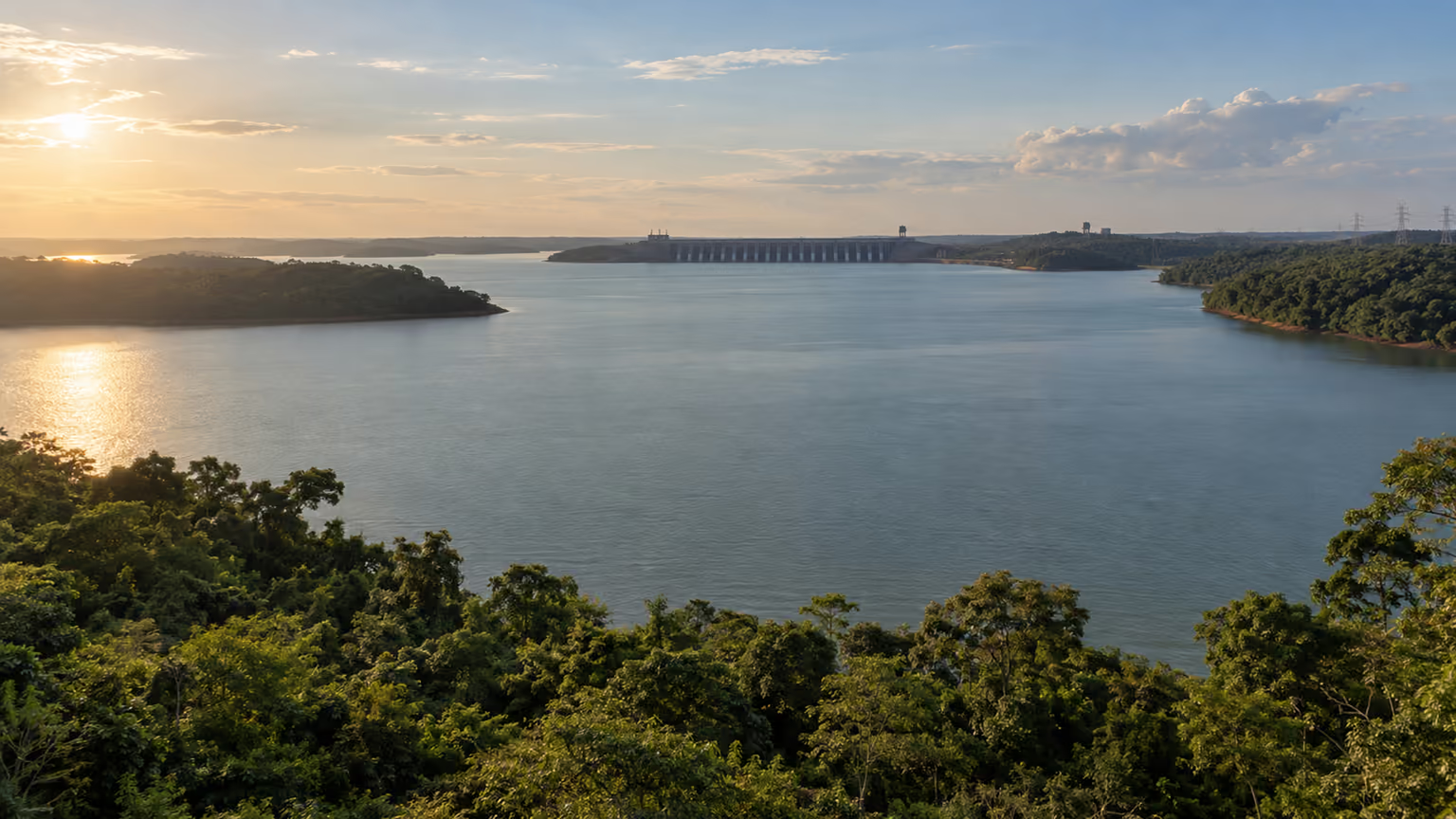
Guaíra Falls, called Sete Quedas in Portuguese and Saltos del Guairá in Spanish, were part of the Paraná River landscape on the border between Brazil and Paraguay. The formation of the Itaipu reservoir submerged the waterfalls in 1982. Visitors today cannot see the waterfall views shown in historical photographs.
Itaipu’s own history describes the former falls area as now covered by the reservoir and records the completion of the dam works in October 1982. That distinction should guide all planning here. Search results and old captions may still call the falls a destination; they preserve the name of a lost landscape, not evidence of an operating waterfall park.
Sources: Itaipu Binacional: Nuestra historia
| Option | Best fit | Main consideration |
|---|---|---|
| Historical Guaíra visit | Best fitMemory of Sete Quedas and regional context | Main considerationNo intact waterfall attraction survives |
| Itaipu visitor experience | Best fitEngineering and reservoir interpretation | Main considerationOfficial departure point and selected experience |
| Iguaçu National Park | Best fitA present-day waterfall trip | Main considerationSeparate destination and park arrangements |
Use historical images with their dates attached
Old photographs, postcards and maps are the most direct way to understand the former attraction. Look for a date and a location caption, and compare more than one image before imagining the layout. Different viewpoints can make a broad river system look like a single drop or several disconnected cascades.
Avoid repeating unsourced rankings about the world’s largest waterfall. Height, width and flow measure different things, and historical estimates need context. A useful account instead explains where the falls were, how visitors encountered them and why the landscape changed. If sharing an image, preserve its archive credit and date so it is not mistaken for a present-day photograph of somewhere a traveler can book.
When contacting a local institution, ask whether its collection includes photographs or maps of Sete Quedas specifically. A general regional museum may cover other periods without documenting the former waterfalls in detail.
Visit Guaíra for the present landscape
A stay in Guaíra makes sense for someone interested in the region and the memory of Sete Quedas. It is a different decision from booking a waterfall holiday. Before adding a local museum, viewpoint or memorial to an itinerary, confirm its exact location, current opening arrangements and whether it actually interprets the falls.
Give a guide the subject you want to explore: the former Paraná landscape, local recollections or the reservoir’s impact. Ask what can be seen on land rather than accepting a vague promise to see the falls. Do not seek an exposed remnant by entering restricted banks, taking an unapproved boat or relying on low-water rumors. Water levels do not turn the lost attraction into a safe visitor route.
Itaipu offers a separate engineering visit
The Itaipu visitor operation provides a way to understand the hydroelectric project and today’s reservoir landscape. Use the official visitor site to compare the experiences currently sold, departure location, identification requirements and accessibility. A dam visit is an engineering and regional-history excursion; it does not include the former waterfalls as an intact sight.
Treat transport as a separate part of the plan. Guaíra and the dam’s visitor facilities are not interchangeable addresses, and an accommodation listing near the reservoir may be far from your chosen departure. If crossing between Brazil and Paraguay, verify entry requirements for your nationality and the actual crossing you will use. A sightseeing ticket does not provide border permission or resolve transport arrangements.
Choose Iguaçu if your priority is living waterfalls
Travelers seeking a waterfall visit should research Iguaçu Falls separately. UNESCO describes Iguaçu National Park as part of the protected landscape surrounding that waterfall system. Its familiar walkways, viewpoints and visitor trips belong to a different place and should never be used to illustrate a claim that Guaíra Falls survives.
Decide which interest leads your journey. For waterfall scenery, plan around Iguaçu’s current park access. For the story of Sete Quedas, allow time to read historical material and explore the changed Paraná landscape. Combining those interests is possible, but requires an itinerary with distinct stops and enough travel time. Keeping their names, rivers and present status separate prevents an expensive misunderstanding before you reserve accommodation or transport.
Frequently asked questions
When did Guaira Falls disappear?
They were inundated in 1982 as the Itaipu reservoir formed. Historical pictures show the landscape before that change.
Can a boat tour take me to the waterfalls?
Do not book on that understanding. A reservoir or river trip cannot promise the former waterfall spectacle; confirm the actual route and permitted access.
Where should I stay to learn about Sete Quedas?
Consider Guaíra for local context, after confirming the historical sites you want to visit. Choose a separate base if your main activity is an Itaipu dam tour.
Sources and editorial approach
This guide combines official visitor information with our trip-planning advice. It is not a first-hand visit or hotel review. Prices, schedules, access and booking availability can change; confirm the details for your dates before paying.
- Itaipu Binacional: Nuestra historia
Primary institutional history establishes the lost falls area is covered by the reservoir and the 1982 construction milestone.
- Turismo Itaipu: Official visitor information
Current visitor experiences at the hydroelectric project; not a waterfall booking page.
- UNESCO World Heritage Centre: Iguaçu National Park
Verifies the separate surviving waterfall destination and protected-area context.
Source information checked .
Explore more destinations
Browse our destination guides for more places to explore.