Rainforest journey · Destinations
Amazon Rainforest: Choose a Gateway and Trip Style
Amazon rainforest trips vary by gateway, river conditions and lodge or cruise style. Plan realistic wildlife expectations and remote-travel logistics.
Start here
Your questions, answered
Where should I start an Amazon rainforest trip?
Choose a country and gateway before comparing lodges. Manaus is one established Brazilian gateway, but the Amazon is a vast region with many distinct itineraries.
Is a lodge or river cruise better?
A lodge keeps a fixed base for local outings; a cruise moves between river locations. Compare the actual daily activities, transfer time and access needs rather than the label alone.
Start with geography, not one Amazon package
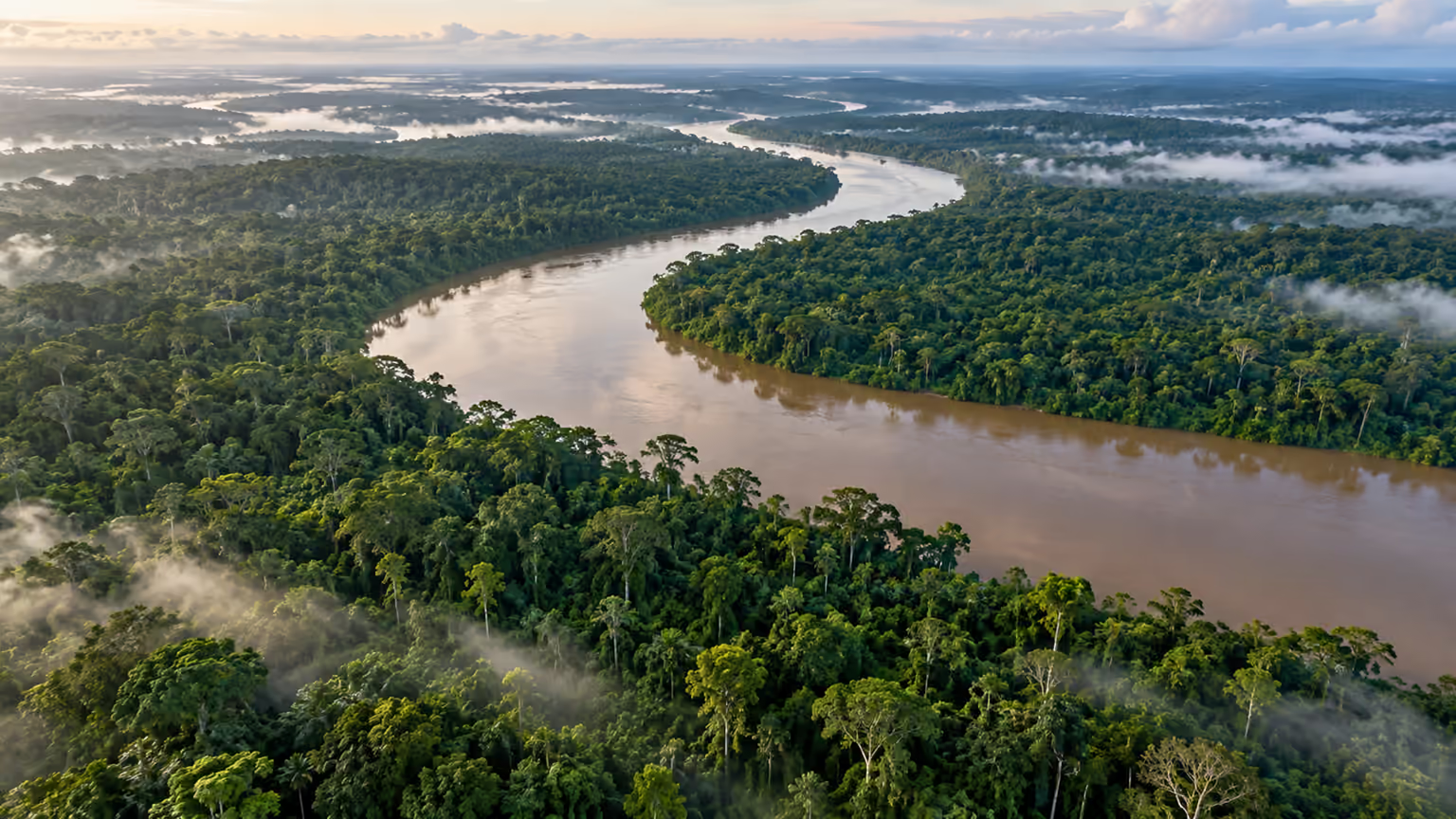
The Amazon rainforest spans a region with many gateways. Before choosing a lodge, decide which country and river section fit your wider journey. Check the time needed to reach the lodge and the habitat around it as carefully as the room description.
Manaus is a well-established Brazilian starting point. Brazil’s official tourism service describes river cruises, forest accommodation and the Meeting of the Waters where the Negro and Solimões meet. That gives a useful starting comparison: a city-based excursion, a forest stay or a longer river itinerary. Other Amazon gateways require their own planning; do not transfer a Manaus weather pattern, health rule or journey estimate to the whole basin.
Sources: Embratur / Visit Brasil: Manaus
If your wider journey includes Bolivia, keep its highland cities and lowland plans distinct with our Bolivia travel planning guide.
| Option | Best fit | Main consideration |
|---|---|---|
| Gateway day trip | Best fitLimited time and city accommodation | Main considerationTime on the water versus in transit |
| Forest lodge | Best fitA fixed base with guided outings | Main considerationTransfer, group size and surrounding habitat |
| River cruise | Best fitSeveral river locations without changing rooms | Main considerationBoat design, landings and included activities |
Compare what happens after you arrive
A lodge provides a fixed place to sleep while guides take you into nearby forest and waterways. A river cruise changes location as part of the journey. Neither format automatically provides better wildlife encounters. Ask for a sample schedule showing boat outings, walks, early starts, rest periods and time actually spent away from the property.
Check group size and guide language. For a lodge, ask whether transfers are shared and how late arrivals are handled. For a cruise, examine the boat you will use, cabin ventilation, stairs and small-boat boarding. Travelers with limited mobility need details of paths and landing stages. The phrase jungle experience does not establish that an itinerary is physically suitable.
Ask whether outings are adapted to a particular interest, such as birds or plants. A general excursion schedule may offer less observation time than a specialist traveler expects.
Plan around water level in your chosen area
River conditions shape access to forest, channels and landing points. UNESCO’s Central Amazon description explains the mix of dryland forest, seasonally flooded forest, lakes and changing waterways. Water is part of the habitat, not simply an obstacle between activities.
Ask the operator what high or low water means for your specific travel dates and route. Can the usual dock be reached? Will a planned walk become a boat outing? Is a longer road transfer needed? Avoid a blanket rule that the wet or dry season is best for everyone. A photographer interested in flooded forest and a traveler focused on walking may choose different conditions. Current local river levels matter more than a generic calendar graphic.
Sources: UNESCO World Heritage Centre: Central Amazon Conservation Complex
Allow time for wildlife and ask about community visits
Wildlife observation rewards quiet and repeated outings. Choose a trip for the habitat and guiding, rather than a guarantee of a particular animal. Ask whether encounters involve wild observation or captive handling. Skip experiences that require holding wildlife, feeding it for a photograph or disturbing an animal’s normal behavior.
For visits to communities, ask who hosts, how residents are paid and whether photography is welcome. A community is not a scheduled performance that every resident must participate in. Buy directly when invited, respect requests about images and do not distribute gifts to children. Good questions before booking reveal more about a provider’s relationship with a place than a broad claim of sustainable travel.
Prepare for transfers, heat and limited services
Build an arrival night in the gateway when a remote transfer cannot reliably connect with your flight. Confirm pickup, baggage limits, drinking water, meals, charging arrangements and the emergency plan. Take a small waterproof day bag and pack medication where you can reach it during the boat journey.
Arrange travel-health advice for the country and exact region, including mosquito precautions and any vaccination requirements. Brazil’s FCDO health page links current recommendations and warns that medical facilities can be limited outside major cities. Verify evacuation coverage and communication arrangements for a remote stay. Breathable long clothing, closed footwear and rain protection are useful, but the operator should specify equipment for the activities actually included. Leave spare time before your international departure in case river or transport conditions alter the return.
Sources: UK FCDO: Brazil health advice
Frequently asked questions
Will I definitely see river dolphins or monkeys?
No wild-animal sighting is guaranteed. Choose suitable habitat, skilled guiding and sufficient time, and avoid trips based on handling or feeding animals.
Can I visit the Amazon on a day trip?
A gateway excursion can introduce river scenery, but it is a different experience from repeated forest outings. Read the route and transfer times carefully.
What should I ask a remote lodge before booking?
Ask about the exact transfer, drinking water, power, guide language, physical access, emergency communication and evacuation arrangements.
Sources and editorial approach
This guide combines official visitor information with our trip-planning advice. It is not a first-hand visit or hotel review. Prices, schedules, access and booking availability can change; confirm the details for your dates before paying.
- UNESCO World Heritage Centre: Central Amazon Conservation Complex
Protected-area context, seasonally flooded forests and changing aquatic habitats.
- Embratur / Visit Brasil: Manaus
Official gateway information, Meeting of the Waters and lodge/cruise trip formats.
- UK FCDO: Brazil health advice
Current health preparation and healthcare-access guidance.
Source information checked .
Explore more destinations
Browse our destination guides for more places to explore.