Basalt coast · Destinations
Giants Causeway: Stones, Trails and Parking Choices
Giants Causeway is free to reach on foot; the visitor experience and parking are separate choices. Pick a trail and plan your coastal visit.
Start here
Your questions, answered
What costs money?
The Visitor Experience and designated parking arrangements have their own terms; access to the stones on foot is free.
Which trail goes directly to the stones?
The Blue Trail provides the direct approach, with gradients and uneven stone surfaces to consider.
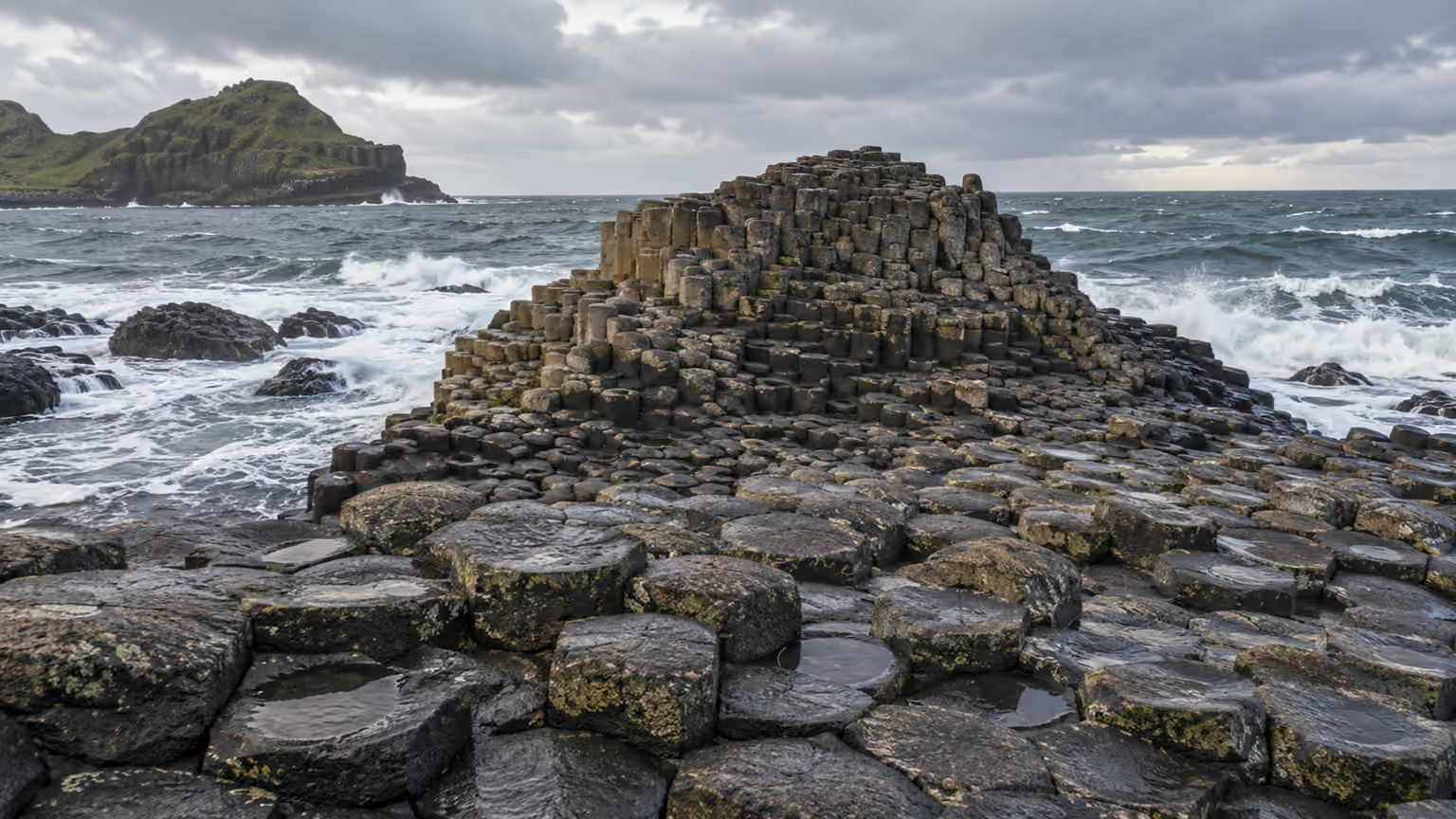
Separate access to the stones from visitor facilities
Giants Causeway can be visited on foot without purchasing the National Trust Visitor Experience. The paid experience includes parking, an exhibition, an audio guide and a guided walk. Choose it if you want those facilities, or plan an independent walk if you do not need them. Make that choice before setting your budget and arrival plan.
Free pedestrian access does not mean every nearby car park is free. The National Trust reserves the main on-site parking for Visitor Experience ticket holders and eligible members or pass holders. It lists separate walking parking at the Causeway Coast Way car park. Decide where your vehicle will go before choosing your walking route, and read the posted terms rather than treating a hotel or roadside space as overflow parking.
Sources: National Trust: Giant’s Causeway
| Option | Best for | Planning trade-off |
|---|---|---|
| Visitor Experience | Best forParking, interpretation and guided context | Planning trade-offBuy the facilities you will use |
| Independent Blue Trail walk | Best forDirect access to the stones | Planning trade-offArrange parking or public transport separately |
| Clifftop extension | Best forA broader coastal perspective | Planning trade-offSteps, exposure and weather matter |
Use the Blue Trail for the direct stone visit
The National Trust’s Blue Trail is the direct approach to the stones, with a published route distance of 1.28 kilometres. It is a formal path but has steep sections. The stated walking duration is not the amount of time most people will want for viewing, stopping and returning to their transport.
Allow plenty of time to take in the view once you reach the columns. Move slowly on the uneven surfaces, especially when wet, and follow ranger instructions. There is no need to climb to the most exposed point to understand the landscape. A view from a stable position lets you see the patterned stones against the sea while keeping your footing. Plan the uphill return before anyone uses their remaining energy exploring further along the shore.
Sources: National Trust: Blue Trail
Add a cliff view only when conditions suit
For a wider view, consider the Red Trail rather than repeating the same approach road. Its official map includes the clifftop and Shepherd’s Steps, connecting back toward the stones. Read the route as a walking commitment with elevation and steps, not an automatic extension for every visitor.
The National Trust warns about exposed dangerous ground near the Aird and high winds. Stay on the indicated route and keep children close at unfenced areas. If the weather or anyone’s confidence makes the clifftop uncomfortable, return using a simpler option. You will still have seen the main geological feature. A longer walk earns its place in the day only if the group has the footwear, time and conditions to enjoy it.
Choose a coastal base or a complete day trip
Bushmills is the nearby village named in the National Trust’s access information; Coleraine is a useful public transport connection. If coming without a car, work backward from the last practical return connection. The Trust notes that some bus services are seasonal, so use a journey planner for the actual travel date rather than copying a route number from a previous summer.
For a coach excursion, compare time at the Causeway and what admission means. A stop can allow access to the coast without including the Visitor Experience. Ask whether parking, guided interpretation or other attractions are bundled. A tour with more stops is not automatically better: decide whether you want a long landscape walk or a brief look at several places before choosing the itinerary.
Sources: National Trust: Giant’s Causeway; National Trust: Blue Trail
Keep room for the coast’s pace
Bring a waterproof layer and footwear with grip, even if your plan looks like a short walk. Use toilet and food facilities before committing to the coastal section, and carry what your group needs rather than relying on an immediate stop beside the stones. Keep dogs on leads, as the National Trust requests.
For photographs, look for the relationship between the columns, cliff and sea instead of waiting for a completely empty foreground. Avoid standing in the route while reviewing images. If your wider trip includes Scotland, the basalt scenery at Staffa makes an interesting comparison, but it is a separate boat-dependent visit. Give each place its own realistic transport day rather than treating the similar rock formations as interchangeable stops.
Sources: National Trust: Giant’s Causeway; National Trust: Blue Trail
Staffa offers another basalt landscape, with boat access as the main planning decision. Plan Fingal’s Cave and Staffa.
Frequently asked questions
Do I need a ticket to see the Giant’s Causeway stones?
No. The National Trust confirms free pedestrian access. Its Visitor Experience is a separate paid package with facilities and parking.
Is the direct path completely level?
No. The Blue Trail has steep sections, and the stones are uneven. Read the accessibility information before selecting a route.
How long should I allow?
Keep enough time for the approach, an unhurried stop at the columns and the uphill return. Add a distinct walking allowance if taking the clifftop route.
Sources and editorial approach
This guide combines official visitor information with our trip-planning advice. It is not a first-hand visit or hotel review. Prices, schedules, access and booking availability can change; confirm the details for your dates before paying.
- National Trust: Giant’s Causeway
Free pedestrian access, Visitor Experience, parking, village and transport context.
- National Trust: Blue Trail
Direct route, 1.28 km, steep sections and wet-stone warning.
- National Trust: Red Trail walking map
Clifftop route, Shepherd’s Steps and exposed-ground warning.
Source information checked .
Explore more destinations
Browse our destination guides for more places to explore.