Visitor guide · Destinations
Socotra Island: Endemic Trees and Travel Limits
Socotra Island is known for endemic trees and protected habitats. Learn its natural heritage and the current limits on travel to Yemen.
Start here
Your questions, answered
Is Socotra separate from Yemen for travel advice?
Do not assume an exception. The UK advice checked for this guide warns against all travel to the whole of Yemen, and this page does not recommend a holiday there now.
Are bottle trees and dragon’s blood trees the same?
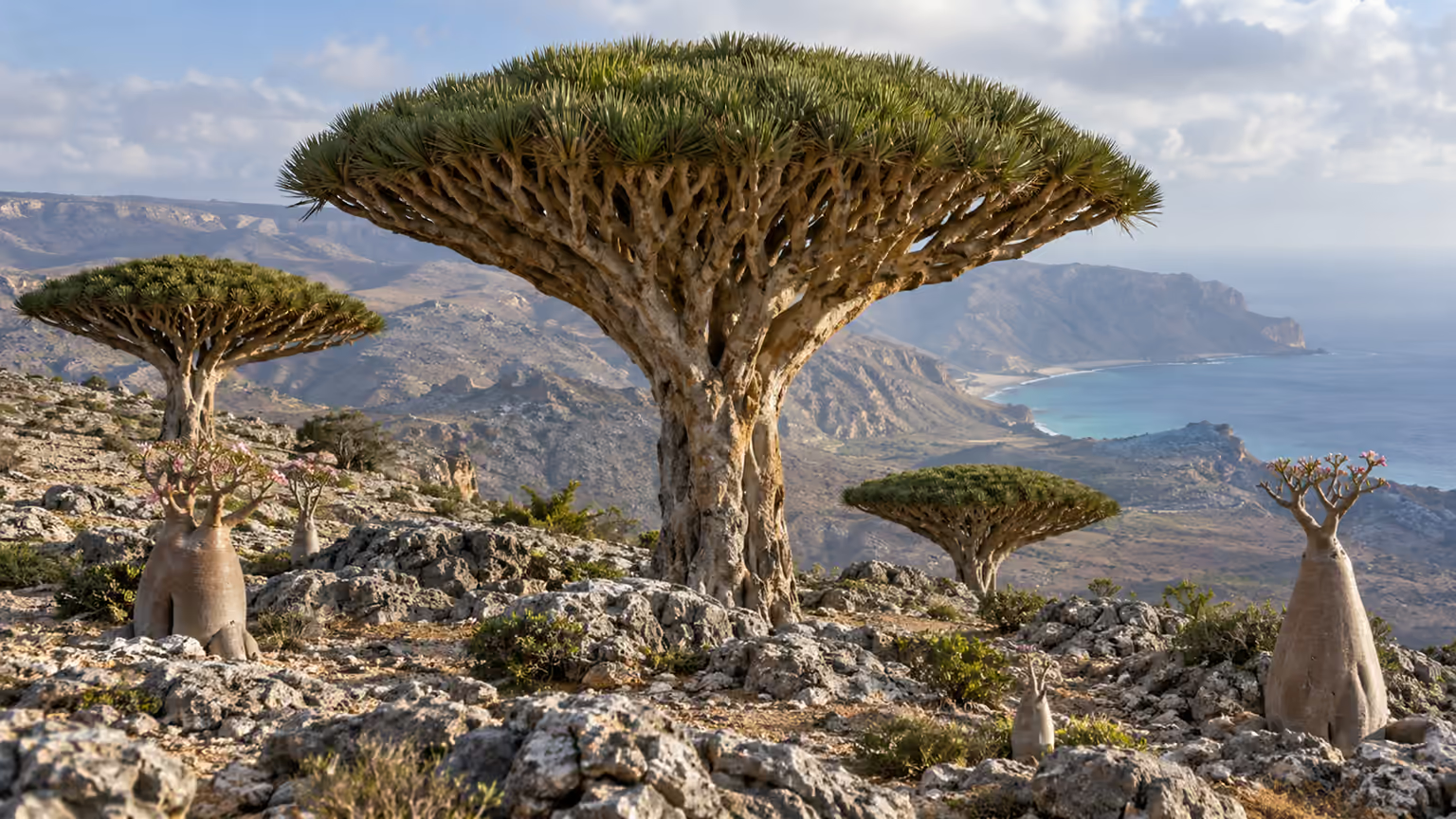
No. Those names should not be used interchangeably. Reliable botanical identification is needed before naming a specific tree in a photograph.
Understand the island within the archipelago
Socotra is the best-known island in a group of Yemeni islands in the northwestern Indian Ocean. This group is called the Socotra Archipelago. UNESCO recognizes its wide range of plants and animals. Some live nowhere else. These are called endemic species. That natural history helps explain the unusual shapes seen in travel photographs.
The protected World Heritage site covers more than the main island. Socotra Island and Socotra Archipelago do not always mean the same area. The larger site includes other islands and habitats. Its protected status does not mean visitors can enter every part of it.
Sources: UNESCO: Socotra Archipelago
| Option | Best fit | Before choosing |
|---|---|---|
| Natural-history research | Best fitLearning about endemic habitats | Before choosingUse reliable species and location labels |
| Wetland study | Best fitUnderstanding coastal conservation | Before choosingDistinguish protected status from public access |
| Leisure travel now | Best fitNot recommended | Before choosingCurrent Yemen warning applies |
Look closely at the trees behind the images
The older article focused on Socotra’s bottle-shaped trees and unusual plants. Their story includes how they adapted to local conditions and lived apart from plants elsewhere. Take care when naming a plant in a photograph. A round trunk or wide crown is not enough to identify its species.
Dragon’s blood trees and bottle-shaped trees often appear together in travel images. The names do not mean the same plant. Use a reliable plant guide or other botanical source to identify a species. A photograph alone does not tell you its age, when it flowers or whether the species is at risk.
Sources: UNESCO: Socotra Archipelago
Conservation includes shores and wetlands
UNESCO describes life on both land and sea. Detwah Lagoon is another protected part of the island group. Its Ramsar record includes a wetland information sheet from Yemen’s environmental authority. These records explain why the habitats matter. They do not mean that every lagoon is open for visitors to use freely.
Study the island’s different habitats as well as its famous trees. Woodland, rocky slopes, coasts and wetlands support different species. Do not collect seeds, plants, shells or other natural items. Avoid promoting off-road travel across ground that is easily damaged.
Sources: UNESCO: Socotra Archipelago; Yemen Environment Protection Authority / Ramsar: Detwah Lagoon Information Sheet
Current travel advice applies to Socotra too
On 12 October 2026, the UK government advises against all travel to the whole of Yemen. This guide does not treat Socotra as an automatic exception. A packaged island tour or an advertised flight is not proof that insurance, emergency support and safe onward travel are available.
Do not use an older itinerary to plan a present trip. Transport and regional conditions can change, and a booked operator cannot remove every risk associated with the wider situation. Review the government advice relevant to your nationality before considering any reservation.
Sources: UK FCDO: Yemen travel advice
For another example of why Yemen’s heritage photographs do not establish present travel access, read our research on Shaharah Bridge.
Keep nature research separate from a booking decision
Start with UNESCO’s site description and the official wetland record to learn about Socotra. Use them to study maps, understand photographs and learn about species found only here. This research does not mean a holiday is suitable now. Check when each source was written and what it was meant to explain.
Any future trip should wait until conditions and official advice support travel. It would still need legal permits and reliable local advice on protecting nature. If you are already there, follow current official help and local instructions. This page explains natural history. It does not offer a route through places with restricted access or uncertain conditions.
Sources: UNESCO: Socotra Archipelago; UK FCDO: Yemen travel advice; Yemen Environment Protection Authority / Ramsar: Detwah Lagoon Information Sheet
Frequently asked questions
Why is the archipelago UNESCO-listed?
The World Heritage record recognizes its exceptional biodiversity and high levels of species found nowhere else. The protected property includes terrestrial and marine areas.
Does a conservation listing mean public access is unrestricted?
No. A designation establishes ecological importance and protection. Permissions, local management rules and current travel conditions are separate questions.
Can a tour operator guarantee safe access?
No. A commercial booking cannot override official travel warnings or guarantee transport, insurance and emergency support. Keep any future plan provisional until advice supports it.
Sources and editorial approach
This guide combines official visitor information with our trip-planning advice. It is not a first-hand visit or hotel review. Prices, schedules, access and booking availability can change; confirm the details for your dates before paying.
- UNESCO: Socotra Archipelago
Official World Heritage description covers endemic biodiversity and conservation concerns.
- UK FCDO: Yemen travel advice
Official advice checked on 12 October 2026 warns against all travel to the whole of Yemen.
- Yemen Environment Protection Authority / Ramsar: Detwah Lagoon Information Sheet
Primary environmental-authority submission documents the protected wetland; historical ecological evidence, not current access advice.
Source information checked .
Explore more destinations
Browse our destination guides for more places to explore.